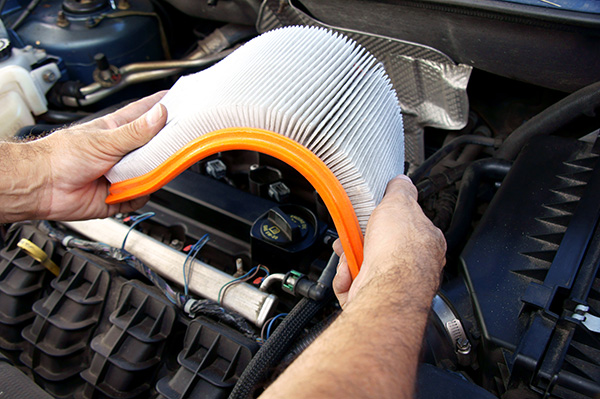
Your engine needs a steady supply of clean air to burn fuel properly. The engine air filter sits at the entrance to the intake system and traps dust, pollen, sand, insects, and other debris before they can reach the throttle body, sensors, cylinders, and other internal components.
There is no single replacement interval that works for every vehicle. Some manufacturers recommend a specific mileage, while others call for checking the filter periodically and replacing it when needed. Where you drive, how often you drive, and the design of the intake system can all change how quickly a filter becomes restricted.
Start With the Manufacturer’s Schedule
The owner’s manual is the best place to find the recommended service interval for your particular vehicle. Depending on the model, the filter may be scheduled for replacement somewhere around 15,000 to 30,000 miles, although some vehicles can go longer under favorable conditions.
Mileage is only part of the picture. A car driven mostly on paved highways may keep its filter cleaner much longer than one regularly traveling through construction zones, dusty rural roads, or areas with heavy pollen. That is why inspecting the actual filter can be more useful than relying only on the odometer.
Driving Conditions Can Shorten Filter Life
Dust is the obvious enemy of an air filter, but it is not the only thing that collects in the filter media. Leaves, seeds, insects, and fine road debris can build up over time. In areas where nearby roads are under construction, a filter can become dirty much sooner than expected.
You may need to check the filter more frequently if you regularly drive:
- On unpaved or dusty roads
- Near active construction areas
- In heavy seasonal pollen
- Through areas with frequent wildfires or airborne dust
- In rural conditions with loose dirt and agricultural debris
Drivers who spend most of their time on clean paved roads may not need replacement as often. The filter should still be checked periodically because time and debris accumulation can affect it even when annual mileage is low.
What Happens When the Filter Becomes Restricted?
A dirty filter makes it harder for air to pass through the intake. Modern engine computers can compensate for some changes in airflow, so you may not immediately notice a major difference from behind the wheel.
If the restriction becomes severe, the engine may have more difficulty getting the air it needs under higher load. You might notice weaker acceleration, especially when merging or climbing a hill. Fuel economy can also suffer in certain situations, although modern fuel-injected engines generally handle moderate filter restriction better than older carbureted engines did.
Signs the Filter Needs Attention
You do not have to wait until the engine begins running poorly to replace an air filter. In fact, by the time a filter creates an obvious performance complaint, it may have been overdue for some time.
Possible signs include:
- A filter packed with visible dirt or debris
- Noticeably weaker acceleration under load
- Unusual intake noise
- Reduced fuel economy without another clear cause
- Debris collecting inside the air filter housing
A dark-looking filter is not automatically unusable. Some filter materials naturally discolor with age, and dirt can collect unevenly. The better question is whether the media is restricted, damaged, wet, or heavily contaminated.
A Damaged Filter Should Be Replaced
Restriction is not the only reason to install a new filter. A torn filter, collapsed section, damaged sealing edge, or poorly fitted element can allow unfiltered air to bypass the media completely.
That can be more harmful than a moderately dirty filter because abrasive particles may reach the mass airflow sensor, turbocharger compressor, throttle body, or engine cylinders. Dirt passing through the intake can accelerate wear and create problems that cost far more than a replacement filter.
The Air Filter Housing Needs Attention Too
Replacing the filter without checking the housing can leave debris sitting directly underneath the new element. Leaves, sand, and dirt should be removed carefully so they do not fall into the clean side of the intake.
Technicians also check the housing clips, lid, intake duct, and seals. A cracked intake tube or cover that does not close correctly can allow dirty air into the system around the filter. On vehicles with a mass airflow sensor, air entering through a damaged duct can also create incorrect airflow readings and drivability concerns.
Can You Clean and Reuse an Engine Air Filter?
Most standard paper filters are intended to be replaced, not washed. Water, compressed air, or aggressive cleaning can damage the fibers and create openings that are difficult to see.
Some aftermarket reusable filters are designed to be cleaned and treated according to specific instructions. Too much filter oil on certain reusable designs can contaminate nearby airflow sensors. If your vehicle uses one of these filters, follow the manufacturer’s cleaning and servicing procedure rather than treating it like a disposable paper element.
Does a New Filter Improve Fuel Economy?
Replacing a badly restricted filter can restore normal airflow and may improve performance. On a modern computer-controlled engine, however, replacing a filter that is only slightly dirty usually will not create a large jump in miles per gallon.
Fuel economy is affected by many other factors, including tire pressure, driving speed, alignment, engine temperature, ignition condition, and traffic. If mileage has dropped noticeably, installing a filter without checking anything else may miss the real cause.
Make the Filter Part of Regular Maintenance
The easiest approach is to have the engine air filter checked during regular maintenance rather than waiting for a performance problem. A technician can compare its condition with the vehicle’s mileage, driving environment, and service history.
There is no benefit to replacing a clean filter far ahead of schedule, but there is also little reason to keep driving with one that is packed with debris or physically damaged. Checking it takes only a short time on many vehicles and gives you a clear answer about whether replacement is actually needed.
Get Engine Air Filter Service in Buda and Kyle, TX, With ME Automotive
ME Automotive serves drivers in Buda and Kyle, TX. Our team can check your engine air filter, intake housing, ductwork, and related components and replace the filter when its condition calls for it.
Contact us to schedule service and keep clean air reaching your engine.