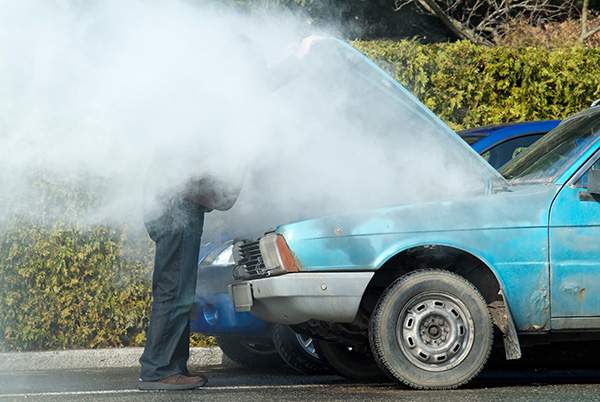
Heat has a way of finding the weak spot in a car. The same vehicle that felt fine in mild weather can start creeping toward the hot side in traffic, especially with the A/C running and the pavement cooking beneath it.
That is usually not bad luck.
High outside temperatures make every part of the cooling system work harder. If the coolant is low, the fan is weak, the radiator is restricted, or a hose is close to failing, summer driving will usually expose it.
Why Heat Finds Cooling System Weak Spots
Your engine already creates plenty of heat on its own. The cooling system’s job is to remove that heat, move it through the radiator, and keep the engine within a safe operating range. Hot weather gives the system less room to recover.
Traffic makes it worse. At highway speed, air moves through the radiator naturally. At a stoplight or in slow traffic, the cooling fans have to do most of the work. If the fans are weak, the radiator is dirty, or the coolant is not flowing well, the temperature can climb even though nothing seems wrong while cruising.
Coolant Level Is The First Thing To Watch
Coolant does not disappear just because the weather is hot. If the reservoir keeps dropping, there is a leak, a pressure issue, or an internal problem. Topping it off may buy time, but it does not explain where the coolant went.
Look for small clues before the engine overheats. A sweet smell after parking, dried crust near hose ends, damp areas around the radiator, or coolant stains near the water pump can all point to a leak that has been drying before it reaches the ground. We see this often when a small seep only shows itself once the system is hot and pressurized.
Radiators And Fans Have To Keep Up
The radiator needs clean airflow and clean internal passages. Dirt, bugs, leaves, and road debris can block the outside. Old coolant, corrosion, or buildup can reduce flow inside. Either problem makes it harder for heat to leave the engine.
Cooling fans are just as important in hot weather. If the fan motor is weak, the relay is failing, or the fan does not turn on at the right temperature, the car may run fine on the freeway and heat up at idle. That pattern tells us where to look first.
Pressure Caps, Hoses, And Thermostats
The cooling system runs under pressure for a reason. Pressure raises the coolant's boiling point and helps the system stay stable. A weak radiator or reservoir cap can let pressure escape, increasing the risk of boiling over.
Hoses also take a beating from heat cycles. They can swell, soften, crack, or collapse internally. A thermostat that sticks can block the flow or keep the engine from regulating temperature correctly. These parts are not exciting, but a single weak part can throw the whole system off.
Warning Signs Before Full Overheating
Overheating does not always start with steam pouring out from under the hood. Often, there are smaller signs first. The temperature gauge may climb in traffic, then drop once you start moving. The A/C may blow warmer at idle. You may smell coolant after shutting off the car.
A heater that cycles from hot to cool during the same drive can indicate low coolant or air in the system. A dashboard warning light means the car has already detected a temperature problem. If the gauge is moving higher than normal, treat that as useful information, not something to watch for another week.
What To Do If The Temperature Starts Climbing
If the temperature gauge rises, turn off the A/C and reduce engine load. If it keeps climbing, find a safe place to stop and shut the engine off. Do not remove the coolant cap while the engine is hot. Hot, pressurized coolant can spray out quickly.
Trying to make it home is where many expensive cooling system stories begin. A tow is annoying, but an overheated engine can damage head gaskets, seals, and metal surfaces. If the warning comes back quickly after the engine cools, driving farther is not worth the risk.
How To Avoid Engine Overheating
The best prevention is simple: check the cooling system before the heat exposes the problem. Regular maintenance should include coolant level, coolant condition, hose condition, radiator condition, cap pressure, fan operation, belt condition, and visible leak checks.
A cooling system inspection is especially smart before road trips, long commutes, or heavy A/C use. If the coolant is old, the level keeps dropping, or the temperature gauge has already moved higher than normal, handle it before the next hot drive.
Get Cooling System Service In Texas, With ME Automotive
If your vehicle is losing coolant, running hot, or showing signs that the cooling system is struggling, ME Automotive can check the system at our Buda, TX, and Kyle, TX, locations.
Book a visit before the next hot drive puts more stress on a cooling system that is already on the edge.