Fuel delivery problems rarely begin with a complete failure. A vehicle may take a little longer to start, hesitate during acceleration, or feel weaker when climbing a hill. Because the engine still runs, those early changes are easy to blame on old spark plugs, poor fuel, or normal wear.
The fuel pump and fuel filter work closely together, so their symptoms can overlap. One supplies pressure and volume from the tank, while the other keeps dirt and debris from reaching the injectors. Finding out which part is causing the problem takes more than judging how the car feels.
How The Fuel Pump And Filter Work Together
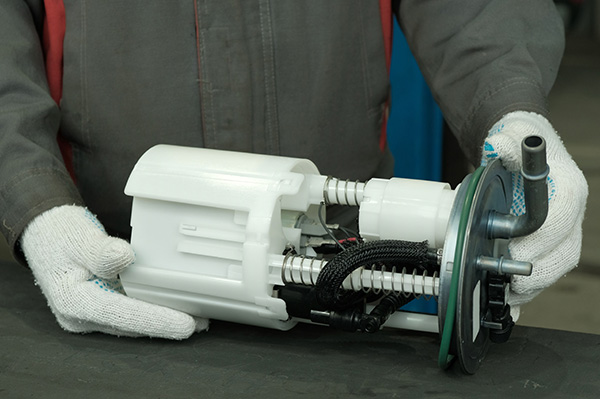
The fuel pump draws gasoline from the tank and sends it toward the engine at a controlled pressure. On many modern vehicles, the pump is located inside the fuel tank and is cooled by the fuel around it. The engine computer and pressure regulator then help manage how much fuel reaches the injectors.
The fuel filter catches contamination before it can enter the injectors or high-pressure fuel components. Some filters are mounted along the fuel line and have a scheduled replacement interval. Others are built into the pump assembly and are not serviced separately. When either part restricts fuel flow, the engine may struggle most under increased demand.
Long Cranking Can Point Toward Low Fuel Pressure
A healthy fuel system builds pressure quickly when the vehicle is started. If the pump is weak or pressure leaks down while the car sits, the engine may crank several seconds before firing. Starting may be worse in the morning, after a hot soak, or when the fuel tank is low.
A clogged filter can contribute if it restricts fuel flow, but repeated long cranking is commonly linked to weak pressure, a failing check valve, leaking injector, or pressure regulator concern. Testing how fast pressure builds and how well it holds after shutdown provides more useful information than replacing the pump based on the starting delay alone.
Hesitation Under Load Is A Common Warning
Fuel demand rises sharply when you accelerate, climb a hill, tow, or carry a heavy load. A weak pump may keep up during idle and light cruising but fall behind when the engine needs more fuel. The car can hesitate, surge, stumble, or feel as though the gas pedal is not producing the expected response.
A restricted filter creates a similar problem because it limits how much fuel can pass through. The vehicle may feel normal around town and lose power during freeway merging or long uphill pulls. Ignition misfires, airflow sensor faults, transmission concerns, and exhaust restrictions can cause the same feeling, so fuel pressure needs to be checked under the conditions that produce the symptom.
Clues That Can Point Toward The Fuel Pump
A failing pump does not always make noise, but some produce a louder whining or humming sound from the fuel tank. The sound may increase before starting trouble or power loss becomes severe. A pump can also stop working intermittently after it heats up, then operate again once the vehicle cools.
Other clues include an engine that stalls without warning, poor starting at low fuel levels, and pressure dropping below specification during acceleration. Electrical faults can imitate a bad pump as well. A weak relay, poor ground, damaged wiring, or corroded connector may prevent a healthy pump from receiving the voltage it needs.
Clues That Can Point Toward A Restricted Filter
A restricted fuel filter usually causes trouble when the engine needs a higher volume of fuel. The vehicle may start and idle normally, then lose power at higher speeds or during hard acceleration. If the filter has been neglected far beyond its service interval, the symptom can become more frequent.
These signs can suggest restriction, but the filter design and service procedure vary by vehicle. Some modern cars do not have an external filter that can simply be replaced.
Why Driving With A Nearly Empty Tank Can Hurt The Pump
An in-tank fuel pump uses gasoline for cooling and lubrication. Repeatedly driving with the tank nearly empty can allow the pump to run hotter, especially in warm weather or stop-and-go traffic. Sediment near the bottom of the tank can also become more concentrated, although the pump pickup is designed to draw from that area during normal operation.
Running low once in a while does not automatically destroy the pump. The concern is a long-term habit, particularly on an older vehicle with a tired pump. Keeping a reasonable amount of fuel in the tank reduces heat exposure and lowers the chance of being stranded if the gauge reading is inaccurate.
How Fuel System Testing Finds The Real Cause
The first step is to check for stored codes and review how the engine behaves during startup, idle, and acceleration. A technician may measure fuel pressure, pressure retention, pump volume, electrical current, and voltage at the pump. Some direct-injection vehicles require tests of both low-pressure and high-pressure fuel systems.
The results help separate a weak pump from a restricted filter, faulty regulator, leaking injector, wiring problem, or sensor concern. Replacing a pump without verifying power and ground can leave the original fault unchanged. Regular maintenance records also help show whether a serviceable fuel filter is overdue.
Do Not Wait Until The Engine Will Not Start
Early fuel delivery problems can become unpredictable. A car that only hesitates today may stall in traffic or refuse to restart after the next stop. Running the engine with low fuel pressure can also create a lean condition, misfires, higher combustion temperatures, and, in some situations, catalytic converter damage.
Have the vehicle inspected promptly if it loses power, stalls, takes longer to start, or produces a loud new sound from the tank. If the engine dies while driving, move to a safe location when possible and avoid repeatedly cranking the starter, which can drain the battery.
Get Fuel Pump And Fuel Filter Diagnostics In Buda And Kyle, TX, With ME Automotive
If your vehicle has long starts, hesitation, stalling, or power loss under load, ME Automotive in Buda and Kyle, TX, can test fuel pressure, pump operation, electrical supply, filter restriction, and injector performance.
Contact us to schedule an appointment at either location before an early fuel delivery problem leaves the vehicle unable to start.